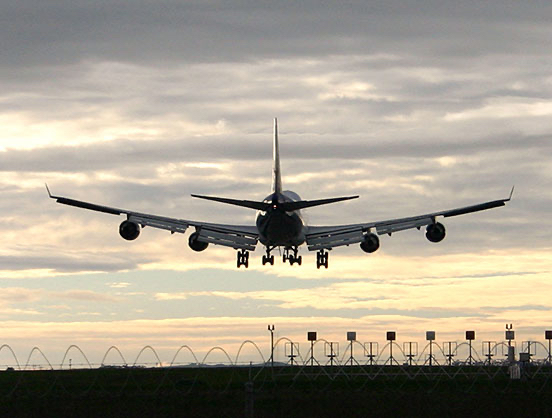
Noise and flight path monitoring system
Our Noise and Flight Path Monitoring System (NFPMS) collects noise and flight path data at Brisbane, Cairns, Canberra, Gold Coast, Sydney, Melbourne, Essendon, Adelaide, Hobart, Sunshine Coast and Perth airports. This system operates 24-hours-a-day, seven-days-a-week, collecting data from every aircraft operating to and from the airport.
NFPMS uses long-term noise monitors located within local communities and is the world’s largest, most geographically-spread system of its type. Some long-term monitors have been in place for more than 20 years.
We also undertake short-term noise monitoring in locations that do not require long-term monitoring or where a long-term monitor cannot be installed. Short-term noise monitors can be deployed for a limited period of time, typically three months.
Access our noise monitor reporting by clicking the button below.


Our approach
To noise monitoring
Long-term noise monitoring
Long-term aircraft noise monitoring data is used by a variety of organisations for different purposes, including the Department of Infrastructure, Transport, Regional Development, Communications, Sport and the Arts, airports and airlines. Noise monitoring is not undertaken to determine compliance with aircraft noise regulations—there are no Australian regulations which specify a maximum, allowed level of aircraft noise within the community.
Rather it is undertaken to:
- Provide accurate information on aircraft flight paths and noise to the community, external stakeholders (such as the Department of Infrastructure, Transport, Regional Development, Communications, Sport and the Arts, and the Aircraft Noise Ombudsman), and for internal use by Airservices
- To reduce uncertainty around aviation noise impacts on the community, while ensuring we provide safe and efficient air navigation services
- To provide data to determine potential environmental (noise) impacts from existing and proposed new flight paths and noise abatement trials, including post-implementation reviews
- To provide data to validate aircraft noise modelling results produced using specialist software for a range of purposes (including environmental impact assessment of proposed flight path changes)
- To provide a framework to identify the acoustic impacts of current and historic aviation activity, and to guide decisions on proposed future changes to aircraft operations.
Short-term noise monitoring
Short-term noise monitors can be installed for a range of reasons including to address a specific community concern, at the request of a Minister, as part of a Commonwealth approval condition, or to support a study, report or review undertaken by Airservices.
The results of short-term noise monitoring can be used to:
- detail noise impacts on communities
- validate noise modelling
- measure the impact of changes in procedures (for example, a flight path modification)
- provide evidence to inform decisions on long term monitoring locations.
We have an existing network of 45 long-term noise monitors near Adelaide, Brisbane, Cairns, Canberra, Gold Coast, Melbourne (includes Essendon), Perth and Sydney Airports. To view the current long-term noise monitor locations visit our WebTrak sites or airport pages.
Our short-term noise monitors are installed near NFPMS airports around Australia. To access a list of previous short-term noise monitor locations visit our noise monitor reporting page.
All noise monitors must be located in areas that effectively capture noise data from arriving and departing aircraft and therefore we try to locate monitors as close to flight paths as possible. The decisions on final locations of monitors take into account a number of other factors, including security, licensing, facilities and background noise levels.
Long-term noise monitoring
We use the following criteria when identifying suitable locations for a long-term noise monitor:
- site suitability to capture all major aircraft types and operations so that the noise data represents the range of aircraft noise in that community
- site ability to effectively capture sufficient noise data (i.e. if aircraft are too far away and therefore produce low noise levels these generally won’t be captured effectively by a noise monitor)
- the site is compliant with acoustic standards that ensure the operational aspects for monitoring can be achieved
- site technical aspects including security, mobile data coverage, access to power, protection from wildlife, and a location within air traffic control radar coverage
- the site is a public or commercial property (for example schools, council depots, childcare centres, as private residences are not suitable for long-term noise monitor locations)
- consideration of background noise levels that can diminish the effectiveness of the noise monitor.
Short-term noise monitoring
We use the following information to identify potential locations for short-term noise monitors:
- Site suitability to capture all major aircraft types and operations, so that the noise data is representative of the range of aircraft noise
- No obstructions or reflective surfaces that would interfere with the operation of the monitor
- Community feedback on suggested location/s
- Site suitability to effectively capture sufficient noise data (i.e. if aircraft are too far away, the range of aircraft noise generally won’t be captured effectively by a noise monitor)
- Site technical aspects including security, mobile data coverage, access to power, protection from wildlife, and a location within air traffic control radar coverage
- Consideration of background noise levels that can impact the effectiveness of the noise monitor (e.g. locations with strong winds or other noise producing sources such as highways may mean aircraft noise cannot be collected effectively).
Private residences are not good locations for long-term noise monitors as they are more likely to change ownership or occupancy which increases the risk of having to relocate the monitor. In addition, access for maintenance can be more difficult.
We may, however, install short-term noise monitors on private properties as they are a portable unit and are in place for a limited time period (typically three months).
Short-term noise monitoring
We accept community suggestions for short-term noise monitoring locations through airport Community Aviation Consultation Groups. From time to time we may also seek suggestions for short-term noise monitoring directly from the community.
Long-term noise monitoring
We do not take unsolicited suggestions for long-term noise monitor locations, but may work through the airport Community Aviation Consultation Groups and with the community, to obtain input on planned long-term installations. Additional long-term noise monitors are only added to our network on rare occasions, generally when there is a large change in operations at one of Australia’s major airports (for example a new runway and flight paths becomes operational).
Before proposing a short-term noise monitor site, you should consider our assessment criteria under the FAQ - How do you decide where to install a short-term noise monitor? and review the short-term noise monitoring reports for previous locations. Locations which have previously been monitored, are generally unlikely to have an additional short-term noise monitor installation.
If your suggestion meets our criteria, you can provide it to your local airport Community Aviation Consultation Group who will review the suggestion and decide if they will progress it to Airservices.
We may also seek suggestions directly from the community through our community engagement website Engage Airservices.
To ensure that your suggestion can be effectively considered you should clearly explain what concern you are asking a noise monitor to address (i.e. which aircraft, which airport, when and why) and what having a noise monitor installed for a period of time, would achieve. If your suggestion is related to seasonal use, we also recommend that you include this information so if your proposal is accepted, we can schedule monitoring for an appropriate time of year.
There are a lot of reasons why a noise monitor may not be placed in your community or a request for a short-term noise monitor may not progress. If this is due to capacity or timing, a future request at that location may be able to be considered.
Some of the common reasons we may not install a short-term monitor in your suggested location are:
- The location has had previous monitoring - If your request is refused because there is or have been noise monitors nearby, this means there is information already available on aircraft noise in your area. While it may not be for your exact home or business, it will provide an indication of the noise levels you will experience and frequency. You can access this information on our Noise monitor reporting page.
- The location is not suitable for a noise monitor - Noise monitors record all noise in their location. Therefore, if aircraft are too quiet or community noise is too loud, an area may not be suitable for a noise monitor. This does not mean that you can’t hear aircraft but that the noise made by aircraft is not different enough from other noise in the area for the noise monitor to pick up. You can learn more about sound and aircraft noise on our Understanding aircraft noise page.
- We cannot find or get permission for a suitable installation site - There are a number of technical requirements for noise monitoring installation and we may be unable to find a suitable site. Alternatively land owners may not agree to a noise monitor being installed on their property. If your area is in the NFPMS, you can still learn about aircraft overflights in your area through WebTrak or our airport pages. If your area is not in the NFPMS you may be able to find information on aircraft operations through your local airport website by accessing the airport’s master plan (where available) or viewing tracks on a flight tracker website.
- The suggestion isn’t about noise - If you are concerned about an increase in aircraft noise because your home is being overflown more frequently or there has been a change in operations, then a noise monitor may not provide useful information. This is because noise monitors can only confirm there is noise, rather than identify if there has been a change in operations in your area, and why. Find out if there has been a change to the flight paths in your area by visiting our Engage Airservices website or contacting your local airport. Make a complaint or ask questions about aircraft operations in your area through our Noise Complaints and Information Service.
- There currently isn’t capacity to do noise monitoring in the area - We undertake short-term noise monitoring at sites across Australia and need to be equitable in how we use our noise monitoring resources. If noise monitoring has recently been undertaken in your region, we may not be able to undertake noise monitoring again in your area until other regions have also had an opportunity for noise monitoring. Planning, site selection, agreements, and installation of noise monitors can take some time so we usually schedule noise monitoring activities in advance. This may mean we have already agreed to undertake noise monitoring in a number of locations and our schedule may be full for the near future.
- Monitoring in the area is on hold because of an upcoming change - If we are implementing a flight path change or an airport is changing their infrastructure (for example building a new runway) we will generally place any long-term and short-term noise monitoring decisions on hold until that change has been implemented. One of the objectives of noise monitoring is to provide information that assists the community now and in the future. If there is a change, this can impact both the way aircraft are distributed and how they fly, which can mean noise monitor locations (for long-term monitors) and captured noise data (from short-term monitors) is not useful after a change is implemented.
- The CACG did not accept the noise monitor proposal - Generally requests come through local airport Community Aviation Consultation Groups (CACGs) to Airservices. This helps to ensure suggested locations are considered appropriate by the general community and do not represent the views of one individual. Sometimes the CACG may get several suggestions for noise monitor locations and may need to choose between locations or may have already accepted a suggestion before yours was submitted. If you have made a suggestion to your local airport CACG, and it has not been accepted, you can contact the CACG directly to understand their decision.
Technical
Noise monitoring information

As an aircraft flies over a monitor, the noise level rises above the background noise level, peaks (usually within 10 seconds) and then slowly returns to the background level. This is a noise event and it lasts for around 20-40 seconds but varies depending on the height, type and loudness of the aircraft.
A noise monitor captures each individual noise event. An event begins when the noise level exceeds a certain threshold value set in the noise monitor (which will be above the background noise level) and ends when the noise level drops below it. The peak level and the noise level for each second of the event is stored. Noise monitors also measure average noise levels and track trends. This data is then matched with our radar data. Data is usually averaged over a period of time, in order to reduce extreme results that may arise from unusual weather conditions or other noise sources (e.g. machinery, motorcycles).
Visit Understanding Aircraft Noise to learn more about sound and aircraft noise.
A noise monitor, also referred to as a noise monitoring terminal (NMT) consists of a microphone attached to a mast and an electronics box. The microphone continuously measures the noise level within the range of 30 to 130 decibels. Noise data is downloaded to a central computer system and recorded noise events are matched to aircraft flights within a set distance of the noise monitor.
A noise monitor cannot separate the noise it captures into different individual sources but rather there is a cumulative noise effect which results. In a quiet area, aircraft noise will likely be the dominant noise captured but sometimes other noise sources can be responsible for the maximum noise level, in a correlated aircraft noise event.
The dominant noise source can vary depending on how close each noise source is to the noise monitor and how loud the sound from each noise source is.
There are International Standards that apply to noise monitoring, known as ISO 20906:2009 - Unattended monitoring of aircraft sound in the vicinity of airports. Under these standards a number of considerations need to be taken into account when selecting a potential noise monitoring site.
One of these considerations is the angle from the ground plane between the monitor and aircraft - the elevation angle of aircraft relative to the ground should be at least 30⁰, with an optimal angle greater than 60⁰ to limit uncertainty in sound measurement.
Background noise levels should be representative of overall community noise in the local area. We will generally not place a noise monitor in a non-residential area and aim to place noise monitors as close to directly under the flight path as possible.
Monitoring locations also need to meet certain physical requirements, including:
- being secure from malicious damage
- having good mobile data coverage
- having access to power
- being protected from wildlife
- having good radar coverage (down to the level of the runways).
In Australia, the Air Navigation (Aircraft Noise) Regulations 2018 regulate aircraft noise standards compliance. This Regulation requires that civil aircraft comply with the applicable international noise certification standard, which is determined in a test environment.
For most aircraft operating in Australia, the manufacturer of the aircraft demonstrates compliance as part of the aircraft model’s development.
Noise monitoring is not undertaken to determine compliance with aircraft noise regulations—there are no Australian regulations which specify a maximum, allowed level of aircraft noise within the community.
Our NFPMS was originally set up to monitor operations at major airports across Australia and relies upon obtaining the details of aircraft operations from lodged flight plans.
Over time, the NFPMS has expanded to include other airports in Australia’s main cities, within 50km of the main airport. However, the source radar data for these cities is still obtained from the main city airport, which can result in data gaps (depending on the distance of the secondary airport from the main airport). As these data gaps occur randomly throughout the day, the data, while incomplete, still provides a representative picture of the weekly, hourly and day/night distribution of aircraft operations.
General Aviation (GA) airports, such as Archerfield, Jandakot, Moorabbin and Parafield, have a high proportion of operations relating to training and GA. As a result, the majority of movements at these airports do not lodge a detailed flight plan and therefore there is limited aircraft identification data captured in the NFPMS. Aircraft operations at GA airports include higher numbers of small aircraft operating in closer proximity, compared to operations at major airports. These types of operations, combined with gaps in radar data and limited flight plan information, are all factors that impact the accuracy of the flight identification process in our NFPMS.